Libya Political Risk
The week in Libya that actually mattered, in one concise read. Libya Desk analysts cut through the noise of dozens of outlets and social feeds, drawing on hours of primary research and interviews with senior stakeholders across the political divide and in the international arena.
- Political risk, local politics and stakeholder mapping
- Regulation, policy and economic developments
- International affairs, diplomacy and deals
- Weekly PDF, full archive and direct analyst access
Not ready yet? Get free report summaries by email
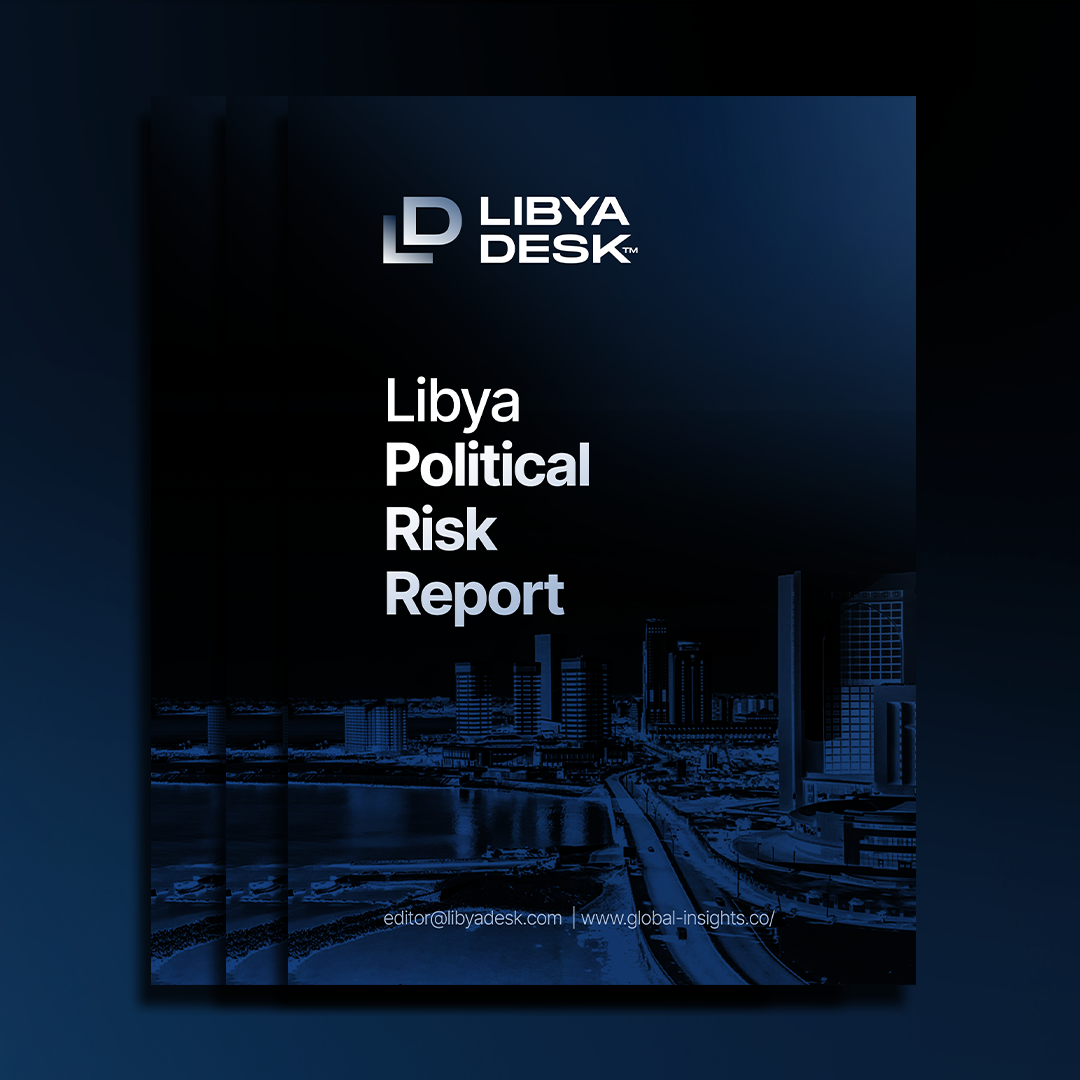
Cut through the noise on Libya
Cut through the noise on Libya
Following Libya means reading dozens of outlets in Arabic and English, sifting through rumours on X and Telegram, and still not knowing what really matters. Libya Political Risk does that work for you. Each week our analysts distil the developments that count into one concise read, built on hours of primary research and interviews with senior stakeholders across Libya's political divide and in the international arena.

Political risk and local politics
The moves that shape power in Tripoli, Benghazi, Misrata and the south, and what they mean for stability and for your operations.

Stakeholder mapping
Who holds influence, who is rising, and how alliances and rivalries are shifting across both camps, the institutions and the armed groups.

Regulation and policy
New laws, decrees and administrative decisions, from the Central Bank and fiscal measures to sector rules that affect foreign companies.

Economic developments
The budget, salaries and strikes, the Central Bank, oil revenues and the state of public finances, and their political consequences.

International affairs and deals
Turkey, Egypt, the US, Russia, the EU, the Gulf and the UN mission: their diplomacy, their contracts and MoUs, and how they change the balance inside Libya.

Our assessment
What we expect next, the scenarios to watch and the signals that would change our view, so you can plan ahead rather than react.
Weekly
One concise read on the week that mattered
Both sides
Sources across Libya's political divide
Primary
Research and senior-stakeholder interviews, not aggregation
Since 2018
Libya Desk coverage
Read a full issue before you subscribe
Read a full issue before you subscribe
Download the 11 June 2026 issue in full: the big-picture outlook, the week's major events and our in-depth analysis of the development that mattered most. No commitment, just your work email.

Recent issues
Weekly Report (Mar 13)
Weekly Report (Mar 6)
Weekly Report (Feb 27)
Weekly Report (Feb 20)
Weekly Report (Feb 13)
Weekly Report (Feb 6)
Weekly Report (Jan 30)
Weekly Report (Jan 23)
Weekly Report (Jan 16)
Weekly Report (Dec 19)
Weekly Report (Dec 12)
Weekly Report (Dec 05)
Built for organisations with exposure to Libya
Built for organisations with exposure to Libya
When decisions depend on who holds power in Tripoli and Benghazi, a week is a long time. Our clients use the report to stay ahead of the changes that affect their people, contracts and money.

Energy and commodity companies
Political and security risks to fields, ports, contracts and payments.
Corporates and investors
Market entry, partners and counterparties, the regulatory climate and the operating environment.
Banks, insurers and law firms
Country and political risk for credit, cover, disputes and compliance.
Governments and international organisations
An independent read of the political process, its actors and its risks.
Libya's politics: frequently asked questions
Libya's politics: frequently asked questions
Who governs Libya?
Libya has been divided between rival authorities since 2014. In the west, the Tripoli-based Government of National Unity (GNU) is led by Prime Minister Abdulhamid Dabaiba. In the east, the House of Representatives (HoR) backs the Government of National Stability, while the Libyan National Army (LNA), led by Khalifa Haftar, controls much of the east and south. As of October 2026, the two camps are negotiating towards a unified government.
Who are Libya's key political actors?
Beyond the Dabaiba government in Tripoli and the Haftar family in the east, power is shared among the House of Representatives, the High Council of State, the Presidential Council, the Central Bank of Libya, the National Oil Corporation, armed groups and local power brokers in cities such as Misrata and Zintan. Turkey, Egypt, the United States, Russia, the Gulf states and the UN mission all shape the balance.
What is the 4+4 Agreement?
The 4+4 Agreement is a framework negotiated by representatives of Libya's rival camps to unify state institutions and pave the way for a unified government. As of October 2026 it has been signed, the HoR has approved an accompanying elections roadmap, and the UN mission is pressing the High Council of State (HCS) to approve it.
What are the main political risks in Libya?
The main risks are a breakdown of the unification process, spoilers resorting to disruption, including oil shutdowns, and growing popular unrest driven by a deteriorating economy, rising living costs and unequal salaries. Libya Desk assesses that instability may rise in the short term even as a political settlement moves closer.
How can I keep up with developments in Libya?
Libya's news flow is fragmented across Arabic and English media and social platforms, and much of it is unreliable. Libya Political Risk distils each week into one concise report, based on primary research and interviews with senior stakeholders across the political divide and in the international arena. A free sample issue is available.
Get Libya Political Risk for your team
Get Libya Political Risk for your team
Available on its own, or with monthly Libya Energy Insights in the Libya Desk plan. Tell us about your organisation and an analyst will set up access for your team.
- Weekly report and full archive
- PDF for every issue
- Direct line to the analysts